
Indian crypto exchanges and companies have expressed strong support for the Central Board of Direct Taxes' (CBDT) new Crypto Asset Reporting Framework (CARF), which mandates reporting and due-diligence obligations for crypto service providers on all transactions starting 2026.

A new report highlights that publishers need to adopt clear records, AI-specific provisions, and transparent disclosure of AI use to manage legal and commercial risks as the copyright framework around artificial intelligence evolves. Jointly developed by SS Rana & Co and Ficci, the 'Copyright In The AI Age' report emphasises practical governance measures while courts and regulators work on legal principles. It also addresses concerns about authorship, creators' rights, and research integrity amidst increasing AI integration in publishing.
The Delhi government is set to introduce a comprehensive drone policy aimed at creating over 1,000 jobs and regulating drone operations. The policy will focus on establishing research clusters, flight testing facilities, and providing subsidies, while also addressing drone usage for government purposes like traffic management and surveillance, considering the city's extensive 'no drone zones'.

A think tank, GTRI, has urged India to resist US pressure regarding its UPI policies, advocating for competition, policy autonomy, and a sustainable payments ecosystem. This comes as the Lok Sabha passed a bill allowing charges on UPI, and the US has criticised India's digital payment systems, raising concerns about the future of India's digital payment landscape.
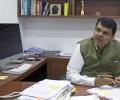
The Maharashtra government is setting up a ministerial task force, led by Minister Ashish Shelar, to ensure the effective implementation of its drone policy. Chief Minister Devendra Fadnavis announced this, emphasising the need for a "policy of policies" to integrate R&D, manufacturing, testing, and subsidies, and to strengthen the state's drone ecosystem, including developing a 'Drone City'.

Experts highlight India's significant market potential for assistive technologies, estimated at Rs 75,000-95,000 crore by 2030. They advocate for a National Assistive Technology Policy to address current gaps in access and service delivery, fostering inclusion, independence, and economic participation for persons with disabilities and the elderly.

Recognising the growing use of AI/ML models by regulated entities across business and decision-making processes, the RBI said weaknesses in governance, oversight, risk management, and controls could expose institutions to financial, operational, compliance, and reputational risks.
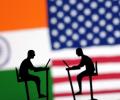
A think tank, GTRI, has urged India to resist US pressure regarding its UPI policies, advocating for the defence of competition, policy autonomy, and the long-term sustainability of its payments ecosystem. This comes as the Lok Sabha passed a bill allowing charges on UPI transactions, a move GTRI suggests should not be influenced by foreign trade complaints.

The Supreme Court has urged the CBSE to reconsider the implementation of its three-language policy for Class 9 students, emphasising that children should not be subjected to undue pressure. The court highlighted concerns about infrastructure, the starting point of the policy, and the definition of 'native' languages.

The proposed order will state that students currently in Classes 7, 8 and 9 who have opted for two foreign languages under the existing framework will be allowed to continue with the same combination until Class 10.

Trai Chairman Anil Kumar Lahoti highlighted the transformative role of satellite communications in expanding seamless connectivity across India, especially in remote areas. He noted that India's space economy is projected to grow significantly, driven by satcom technology that will bridge the digital divide, provide resilient infrastructure during disasters, and support strategic sectors.
Trai Chairman Anil Kumar Lahoti highlighted the transformative role of satellite communications in expanding seamless connectivity across India, especially in remote areas. He noted that India's space economy is projected to grow significantly, driven by satcom technology that will bridge the digital divide, provide resilient infrastructure during disasters, and support strategic sectors.

Economists highlight that resolving domestic policy bottlenecks, particularly through land reforms and improving the ease of doing business, will be critical for Prime Minister Narendra Modi's 'next-generation reforms' and India's economic transformation towards its 'Viksit Bharat' vision for 2047.

Bangladesh is considering joining a newly formed defence alliance between Saudi Arabia, Pakistan, and Turkiye, with junior ministers stating that any decision would be based on national interests and a "Bangladesh First" policy. The pact, signed in Makkah, aims for collective deterrence.

New Delhi must look for formal, institutional statements issued directly from Washington rather than rely on casual pronouncements meant for local audiences, notes Ambassador Rajasekhar.

The Central Board of Direct Taxes (CBDT) has released a 198-page guidance note to assist crypto-asset service providers in complying with reporting obligations under the Income-tax Act, 2025, aligning India with the OECD's Crypto-Asset Reporting Framework (Carf) for automatic exchange of tax information.
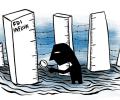
India has significantly improved its position as a global foreign direct investment (FDI) destination, climbing two places to 11th in 2025, with inflows surging by nearly 44 per cent to $38.89 billion, according to the United Nations Conference on Trade and Development (Unctad) World Investment Report 2026.

The 42-year-old, who has had stints at Microsoft, Facebook and Twitter, made the announcement of leaving his role as Senior Policy Advisor for Artificial Intelligence in a post on X on Saturday.

The White House has released a framework for artificial intelligence, focusing on empowering parents to manage their children's digital environment and advocating for federal leadership to promote innovation and address policy challenges.

India's newly formed Artificial Intelligence Governance and Economic Group (AIGEG) is set to advocate for a unified legal framework for AI companies, including developers of large language models and chatbot systems, alongside broader operational rules.

India's UPI system continues its rapid growth, dominating retail payments. Recent amendments to the Payment and Settlement Systems Act allow for targeted Merchant Discount Rates (MDR) on high-value merchant transactions, aiming to create a self-sustaining revenue model for the ecosystem while keeping P2P and low-value payments free. This move could generate significant revenue and encourage ecosystem participation.

The US push for clearer crypto rules is putting pressure on India to fill its own regulatory gap for virtual digital assets.

Delhi Police detained several anti-reservation protesters at Jantar Mantar who were demanding that economic criteria be prioritised over caste for government support and reservation. The protest, mobilised via social media by 'Reservation Hatao Andolan', proceeded despite police denying permission for Jantar Mantar and offering Ramlila Ground as an alternative venue. Demonstrators called for a review of the existing reservation system and the introduction of a creamy-layer criterion.

'Cyberbullying has become extremely worrisome now, with several complaints being received from schools.'

RBI Governor Sanjay Malhotra stated that the central bank is closely monitoring whether the supply shock from the West Asia conflict will lead to a generalised price rise, potentially necessitating monetary policy action.

The Delhi government is developing a drone policy focused on creating research clusters, establishing testing facilities, enabling drone use in traffic management, and providing subsidies to support the drone ecosystem.

An innovation roadmap, a mechanism to double annual bilateral trade within next five years, and a joint artificial intelligence framework were among 13 outcomes to emerge from wide-ranging talks between Prime Minister Narendra Modi and President Emmanuel Macron on Sunday.

The Indian Sports Ministry, led by Minister Manuskh Mandaviya, is establishing a dedicated Task Force to explore the revival of Formula One racing in India. This initiative follows a meeting with key stakeholders, aiming to assess the challenges and benefits of hosting major motorsport events, with a target of bringing F1 back by 2028. The Task Force will recommend a comprehensive policy framework to support motorsports growth, leveraging India's significant F1 fanbase.

A data breach does not end when the headlines fade. For victims, stolen personal information can fuel fraud, identity theft and financial losses for years.

The top 500 listed companies had 860 women directors or board members overall.

Despite near gender parity in basic bank account ownership, women in India remain significantly underrepresented in the growing platform economy due to gaps in digital financial capability and access to credit, according to a joint report by the International Labour Organization and National Council of Applied Economic Research.

Educationists and parents are raising concerns about the CBSE's implementation of the three-language policy for Class 9, questioning the timing and preparedness of schools.
A Parliamentary Standing Committee on Commerce has urged the Indian government to swiftly conclude the proposed India-US Bilateral Trade Agreement (BTA), while ensuring India's interests are protected, recommending complete exemption for key export products like generic medicines and smartphones from future US tariff increases.

Japan is deepening its defence relationship with India while simultaneously expanding its economic, infrastructure and security engagement with countries around India -- particularly Bangladesh. The result is an emerging Japanese conception of South Asia in which India remains the strategic anchor, but the geography surrounding India is becoming increasingly important, points out Varun Arya.

Analysts predict that crude oil prices, geopolitical tensions in West Asia, and upcoming inflation data will be the primary drivers of the Indian stock market this week, alongside foreign investor activity and domestic quarterly earnings.

Many claim disputes arise not because the insurer refuses to pay but because policyholders don't know the claim process, miss important documents or misunderstand what their policy covers.

The Karnataka government has introduced a draft policy to address the growing concerns surrounding excessive and unsafe digital technology use among students, focusing on mental health, cyber safety, and responsible digital behaviour.

The rules require nuclear plant operators to maintain an insurance policy, financial security or a combination of both to cover civil liability for nuclear damage.

The Maharashtra Association of Resident Doctors (MARD) has launched an indefinite statewide strike, protesting the government's decision to allow homoeopaths to register under the Maharashtra Medical Council (MMC) and prescribe allopathic medicines after a six-month course.

The Reserve Bank of India (RBI) has issued amended directions for bank boards, effective October 1, 2026, to rationalise agenda items and enable more focused engagement on strategy and risk governance, while explicitly defining matters reserved for board approval and periodically reviewing delegated powers.
